LifeTime Ponds & good pond practice Blog
Blog pond post advice description for best pond care and good pond practice, to achieve good pond health care for best pond outcomes from experienced talk to help
1/5/20263 min read
Wildlife Ponds & positioning.
In general practice, when opting to install a wildlife pond in your garden, it is not sufficient to simply declare, "this is the location for my wildlife pond." There are several key factors that must be considered beforehand.
When selecting a site for your pond, it is essential to assess the direction of sunlight, the duration of sunlight exposure on the pond, the extent of tree cover throughout the day, and the amount of afternoon sunlight the pond will receive.
Another important consideration is whether the pond will receive a significant influx of fresh water during heavy rains, which can facilitate natural water changes and assist in eliminating stagnant water.
Your primary objective should always be to achieve at least 60% coverage over the pond. While some sunlight is necessary, an excess of it can lead to problems, as no aquatic life can survive without sunlight, and too much sunlight can create another type of issue: stringweed, which is the bane of all pond owners.
I have yet to meet anyone who enjoys dealing with stringweed and the constant maintenance it requires, not to mention the unsightly appearance it creates in ponds. This problem arises from excessive direct sunlight, which can quickly dominate the pond. The more stringweed proliferates, the more challenging it becomes to eradicate. If the pond is exposed to too much sunlight, the sunlight and UV rays provide the necessary nutrients for stringweed to flourish, akin to a cancer.
This situation results in endless treatments and clean-outs, and as long as the pond remains in this sunlit position without adequate cover, this will continue to be the case. There are several measures you can take to mitigate this issue, but it will still require ongoing effort to keep the pond free of blanketweed as much as possible. Cover is essential; incorporating numerous lilies can provide shade to the pond, which helps to some extent. Although the water may still reach extreme temperatures that promote growth, this will help to limit it. Additionally, consider adding bushes around the pond, whether in pots or planted directly
One effective measure is to incorporate pumps and UV sterilizers to eliminate harmful bacteria in the water caused by sunlight exposure. However, this solution incurs ongoing costs and may appear unattractive, depending on how well you can conceal them and the associated piping. While this approach will not completely eradicate the issue, it can help prevent it from escalating by promoting water circulation and reducing stagnant water in direct sunlight. Nevertheless, it is crucial not to assume that this will resolve the problem entirely; it merely provides additional support against it.
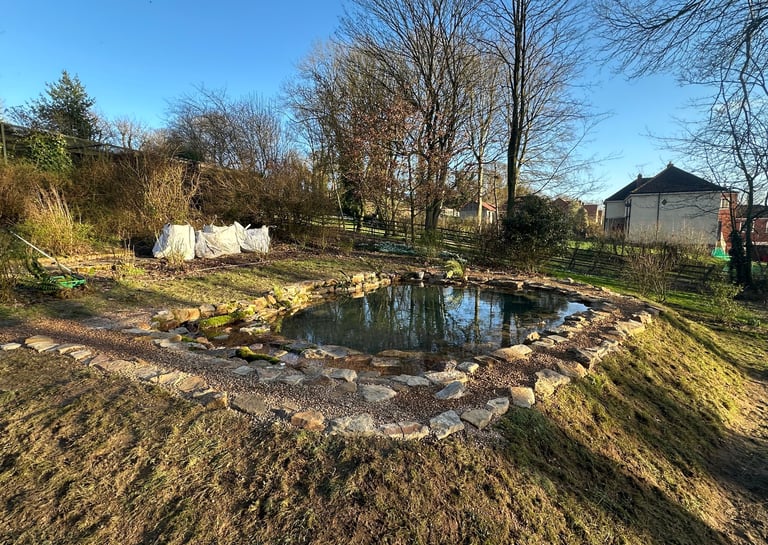
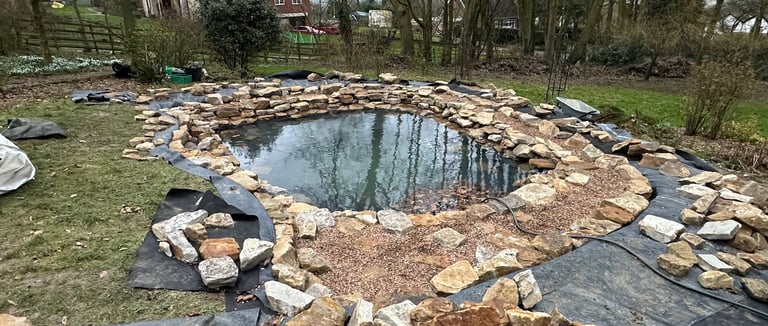
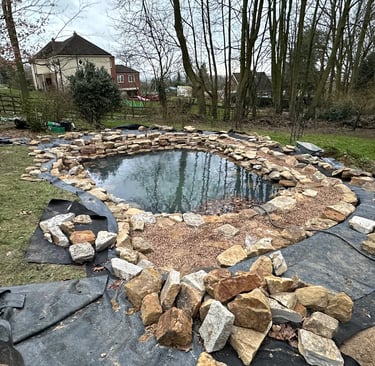
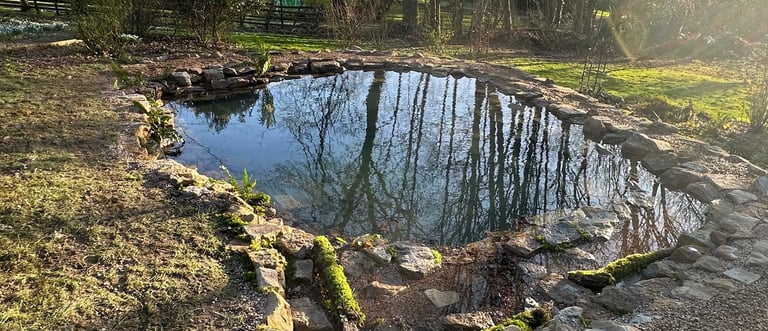
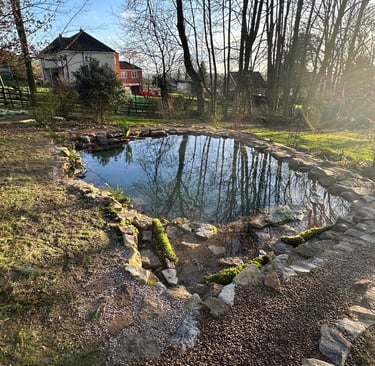
What is absolutely essential and guaranteed is ample shade over the pond, as much as possible. In the images above, observe the placement of this wildlife pond and the extent of tree cover it receives. The images depict various times of the day, showcasing nearly full coverage throughout.
This wildlife pond benefits from excellent shade all day, with pleasant morning and afternoon sunlight exposure, likely receiving about three to four hours of gentle morning sun. After the harsh midday sun has softened, it continues to receive exposure. This arrangement helps maintain the pond in excellent condition year-round, ensuring its sustainability and overall health.
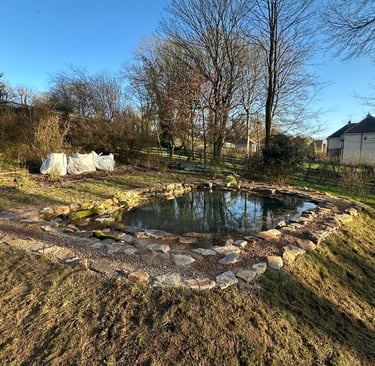
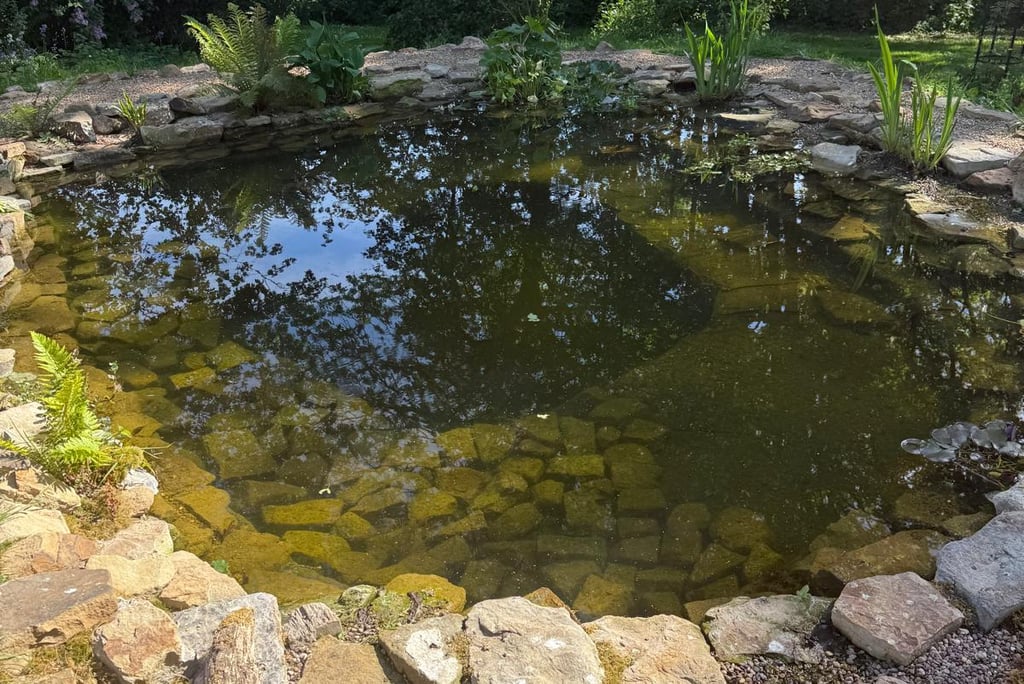
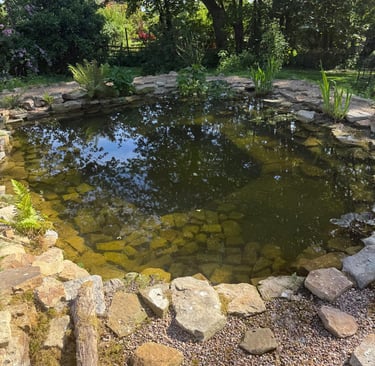
If you refer to the image below of the same pond one year post-installation, you will see that the points I mentioned earlier are crucial for the initial design of a wildlife pond. This wildlife pond was constructed on sloped terrain, but its location was vital due to the tree cover and the morning and afternoon sunlight, which allowed us to fully leverage its position to achieve the desired outcome depicted in the above image.
The excavated ground was compacted and leveled, raising the lower side to provide support for the water and ensuring the pond's surface was even. This created the ideal pond positioning to accomplish all the aforementioned goals. Remarkably, one year after construction, this pond boasts crystal-clear water, allowing visibility of the pebbles at its bottom, demonstrating its excellent condition. also with minimal Lillies needed for the pond allowing maximum pond view as possible because Lillies tend to take over the migratory
Lifetime Ponds
Wildlife Pond Blog